Dubai continues to be one of the most popular destinations for Indian nurses looking to build an international healthcare career. Modern hospitals, tax-free income, world-class healthcare facilities, and excellent career opportunities make the UAE an attractive choice for nurses seeking international experience.
One of the first questions most nurses ask is:
"How much does a nurse actually earn in Dubai?"
The answer depends on several factors, including your clinical experience, nursing specialty, employer, and whether you have already obtained your DHA licence.
In this guide, we'll explain the average nurse salary in Dubai in 2026, what different nursing grades earn, whether salaries are really tax-free, what living costs look like, and what you should check before accepting a job offer.
What Nurses Actually Earn by Grade
The nurse salary in Dubai varies depending on experience, hospital type, specialty, and licensing status.
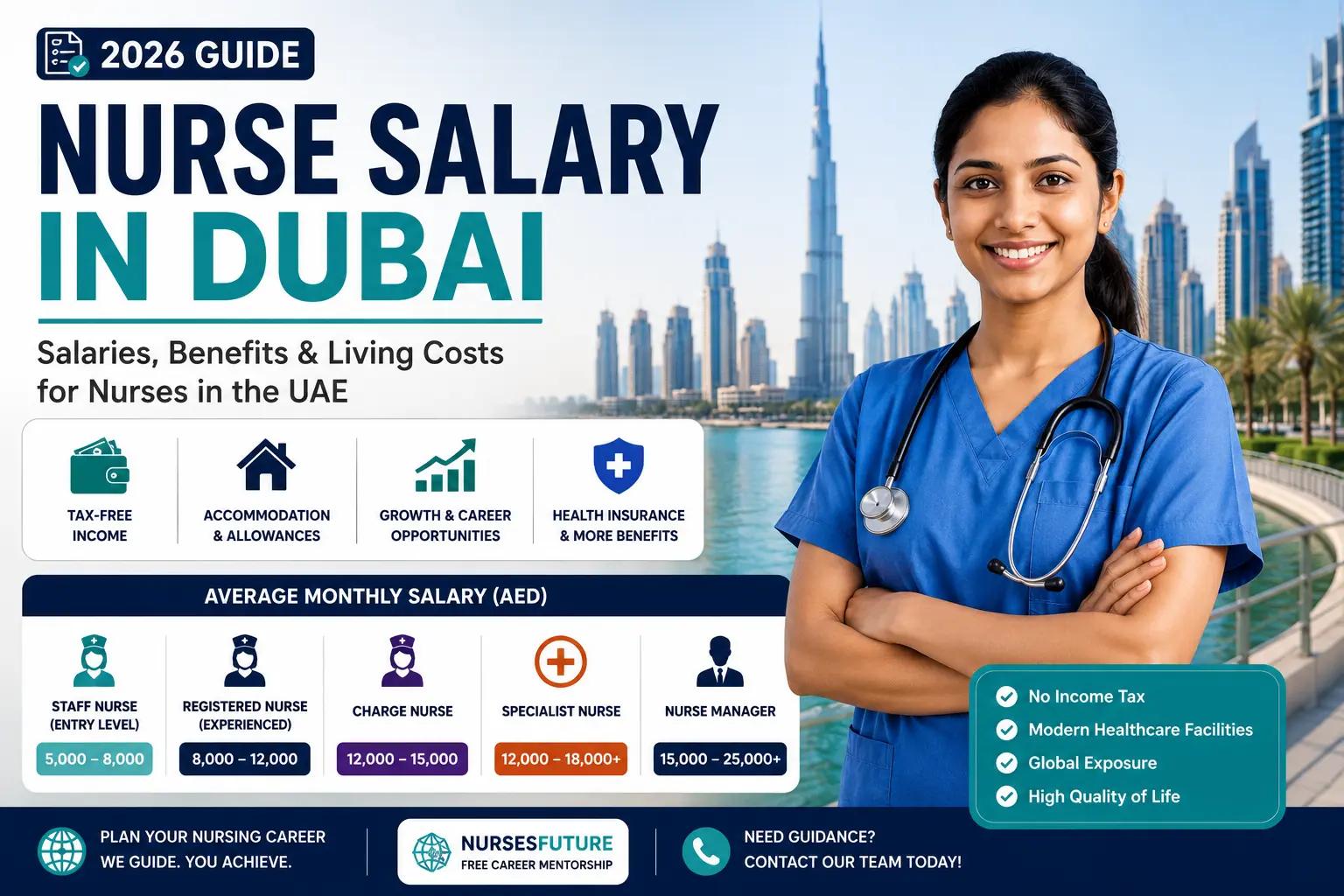
| Grade | Typical Monthly Salary (AED) |
|---|---|
| Staff Nurse (Entry Level) | 5,000 – 8,000 |
| Registered Nurse (Experienced) | 8,000 – 12,000 |
| Charge Nurse | 12,000 – 15,000 |
| Specialist Nurse | 12,000 – 18,000+ |
| Nurse Manager | 15,000 – 25,000+ |
These salary ranges are based on typical market rates and can vary depending on the employer, hospital reputation, and benefits package.
Government hospitals and internationally accredited private hospitals generally offer higher salaries than smaller clinics.
What Affects Nurse Salary in Dubai?
Several factors influence how much a nurse earns in Dubai.
Clinical Experience
Experienced nurses generally earn significantly more than newly qualified nurses. Employers value candidates who have strong clinical skills and previous hospital experience.
DHA Licence
Holding an active Dubai Health Authority (DHA) licence immediately improves your employment opportunities and earning potential.
Nursing Specialty
Specialist nurses often receive higher salaries, particularly in:
- Intensive Care Unit (ICU)
- Emergency Department
- Operating Theatre
- NICU
- Dialysis
- Oncology
- Cardiac Care
Employer
Large hospital groups usually provide:
- Higher salaries
- Better employee benefits
- Career progression
- Professional development opportunities
Smaller clinics may offer lower salaries but can provide more flexible working hours.
Additional Benefits
Many employers also provide:
- Accommodation or housing allowance
- Transportation allowance
- Medical insurance
- Annual airfare
- Overtime pay
- End-of-service gratuity
Staff Nurse Salary in Dubai
The average staff nurse salary in Dubai generally ranges between AED 5,000 and AED 8,000 per month.
Most nurses entering the UAE workforce begin within this salary range before progressing into senior positions.
After gaining UAE clinical experience and maintaining a strong employment record, many nurses move into better-paying hospitals or specialist departments.
Nurse Salary in UAE Compared with Dubai
Many people searching for nurse salary in UAE assume salaries are identical across every emirate.
In reality, salaries vary depending on location and employer.
Dubai offers:
- More private hospital opportunities
- International healthcare groups
- Greater career progression
- More specialist nursing positions
Abu Dhabi may offer similar or even higher salaries for experienced nurses, while salaries in smaller emirates can be slightly lower depending on demand and employer type.
Is Nursing Income in Dubai Really Tax-Free?
Yes.
One of the biggest advantages of working in Dubai is that employment income is generally free from personal income tax.
Unlike many other countries, there is currently no personal income tax deducted from your monthly salary. This means your take-home pay is usually very close to the amount stated in your employment contract.
However, tax-free doesn't mean cost-free.
You'll still need to budget for:
- Accommodation
- Groceries
- Transportation
- Utilities
- Internet
- Personal expenses
Your overall savings will depend largely on your salary package and lifestyle.
What the Salary Buys You (Rent, Groceries & Transport)
To understand whether a salary is attractive, compare it with common monthly expenses.
| Monthly Expense | Typical Cost (AED) |
|---|---|
| Rent (1-bedroom apartment) | 3,500 – 6,000 |
| Groceries | 800 – 1,200 |
| Transportation | 300 – 600 |
| Utilities & Internet | 500 – 800 |
| Estimated Monthly Living Cost | 5,000 – 8,500 |
Accommodation is usually the largest expense.
Many hospitals either provide accommodation, offer a housing allowance, or arrange shared staff accommodation. This can significantly increase your monthly savings.
Public vs Private Hospitals
Both government and private hospitals employ thousands of international nurses.
Government Hospitals
Advantages include:
- Better job security
- Structured salary scales
- Career progression
- Comprehensive employee benefits
- Professional development opportunities
Recruitment can take longer because competition is high.
Private Hospitals
Advantages include:
- Faster recruitment
- Flexible career opportunities
- Specialist departments
- International working environment
Large private hospital groups often offer salary packages that are comparable to government hospitals.
How Salary Changes Once You're Licensed
Completing your UAE licensing process—including DataFlow verification, the Prometric examination, and obtaining your DHA licence—usually opens the door to higher-paying opportunities.
A typical career progression looks like this:
First 1–2 Years
- Entry-level salary
- Learning UAE healthcare standards
- Building local clinical experience
After 2–5 Years
- Higher salary
- Greater responsibilities
- Better hospital opportunities
After 5+ Years
- Charge Nurse
- Specialist Nurse
- Nurse Educator
- Nurse Manager
Many nurses also increase their salary by changing employers after gaining UAE experience.
What to Check in an Offer Letter
Never compare jobs using salary alone.
Review the complete package carefully.
Make sure your contract clearly includes:
- Basic salary
- Housing allowance
- Accommodation
- Transport allowance
- Medical insurance
- Annual airfare
- Annual leave
- Overtime policy
- Working hours
- Probation period
- Visa sponsorship
- End-of-service gratuity
Sometimes a slightly lower salary with accommodation and transport included provides much better overall value than a higher salary without those benefits.
Tips for Increasing Your Salary
You can improve your earning potential by:
- Obtaining your DHA licence before applying
- Developing specialist clinical skills
- Completing DataFlow verification early
- Maintaining professional certifications
- Applying to internationally accredited hospitals
- Negotiating the total benefits package rather than focusing only on salary
Final Thoughts
Dubai continues to offer excellent opportunities for international nurses seeking competitive salaries and long-term career growth.
While staff nurse salary in Dubai usually begins around AED 5,000–8,000 per month, experienced nurses and specialists can earn significantly more.
Before accepting any offer, compare the complete employment package—including accommodation, transport, insurance, annual leave, airfare, and career development opportunities—not just the monthly salary.
If you're planning to work in the UAE and need guidance with licensing, DataFlow verification, or the DHA process, explore our UAE Nursing Career Guide or contact the Nurses Future team for free guidance.
Frequently Asked Questions
Yes. Employment income in the UAE is generally free from personal income tax, allowing nurses to keep more of their monthly earnings. You should still budget for living expenses and review any deductions listed in your employment contract.
Many hospitals provide accommodation, shared housing, or a housing allowance. The exact arrangement depends on the employer, so always confirm this before signing your contract.
Yes. Indian nurses can work in Dubai after meeting the required licensing requirements, including DataFlow verification, passing the Prometric examination, and obtaining a DHA licence.
Specialties such as ICU, Emergency, Operating Theatre, Oncology, NICU, Dialysis, and Nurse Management generally receive higher salaries because of increased demand and advanced clinical skills.
Many employers include an annual return airfare as part of the employment package. Always check your offer letter to confirm whether this benefit is included.
Many hospitals pay overtime according to their employment policies and UAE labour regulations, although overtime rates and eligibility vary between employers.
Obtaining your DHA licence, developing specialist skills, gaining UAE clinical experience, and working for internationally accredited hospitals are some of the most effective ways to increase your earning potential.